Choose The Darkest House if you want an existing campaign to turn inward: a malignant place that can appear behind a familiar door and use the characters’ histories against them. Choose The Darkest Woods if you want the campaign to veer into hostile wilderness, where getting lost, surviving and escaping matter more than clearing a location for loot. Both are system-agnostic horror mega-adventures built to interrupt an ongoing game, and both are offered as a hardcover, a Mac-and-Windows desktop app, or a separate print-plus-app purchase. The app is a way to run the adventure, not a required supplement to the book.
The more important purchase decision is therefore two-part: which interruption suits your characters, and how will your GM present and share it? The Darkest Woods is described as a spiritual successor to The Darkest House, but that does not make it a required continuation or an upgrade you must buy after the House. Each has its own premise and route into a campaign.
What Each Adventure Does to Your Campaign
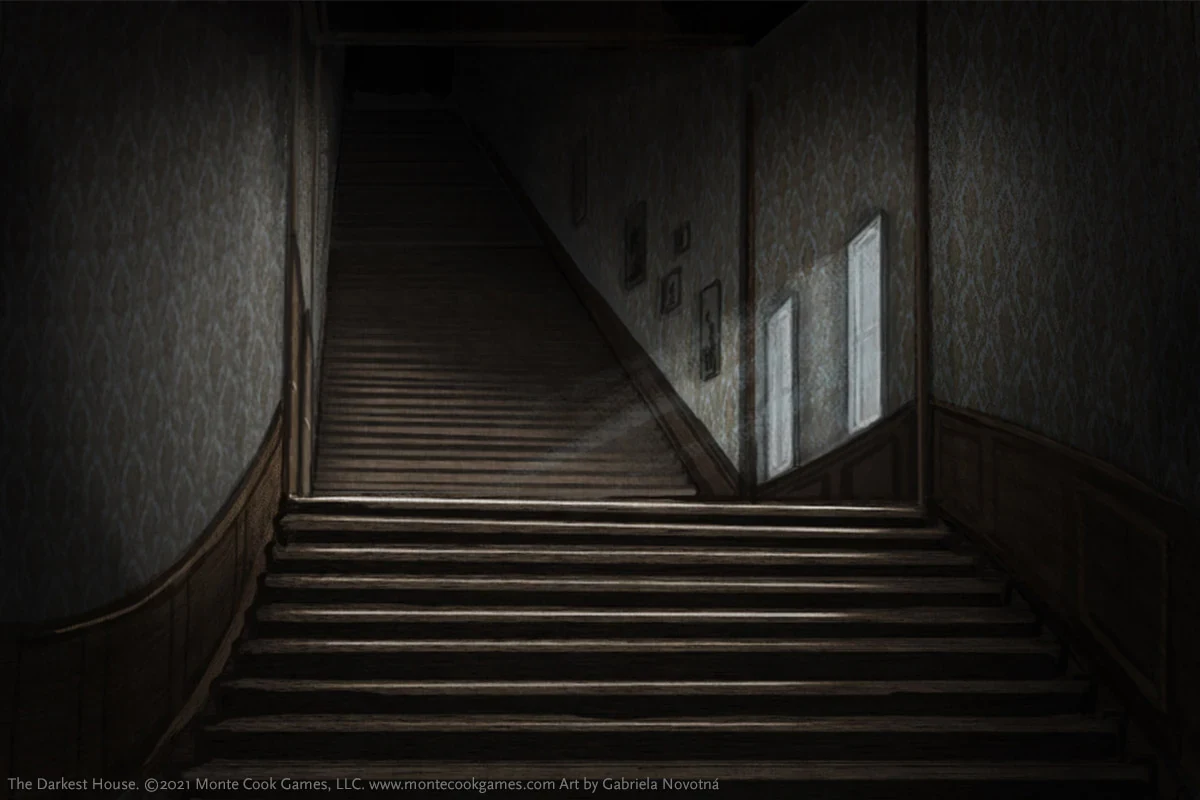
The Darkest House begins with an entrance that belongs in the characters’ world. It might be the long-empty house outside town, an apartment no tenant keeps for long, or an unsettling unit in station quarters. Beyond that ordinary threshold is the House that Hungers, a malignant force able to take root across settings. The publisher suggests using its many rooms and secrets either as a spooky interlude or as a recurring, substantial campaign theme; the amount of material does not oblige you to make it the whole campaign.
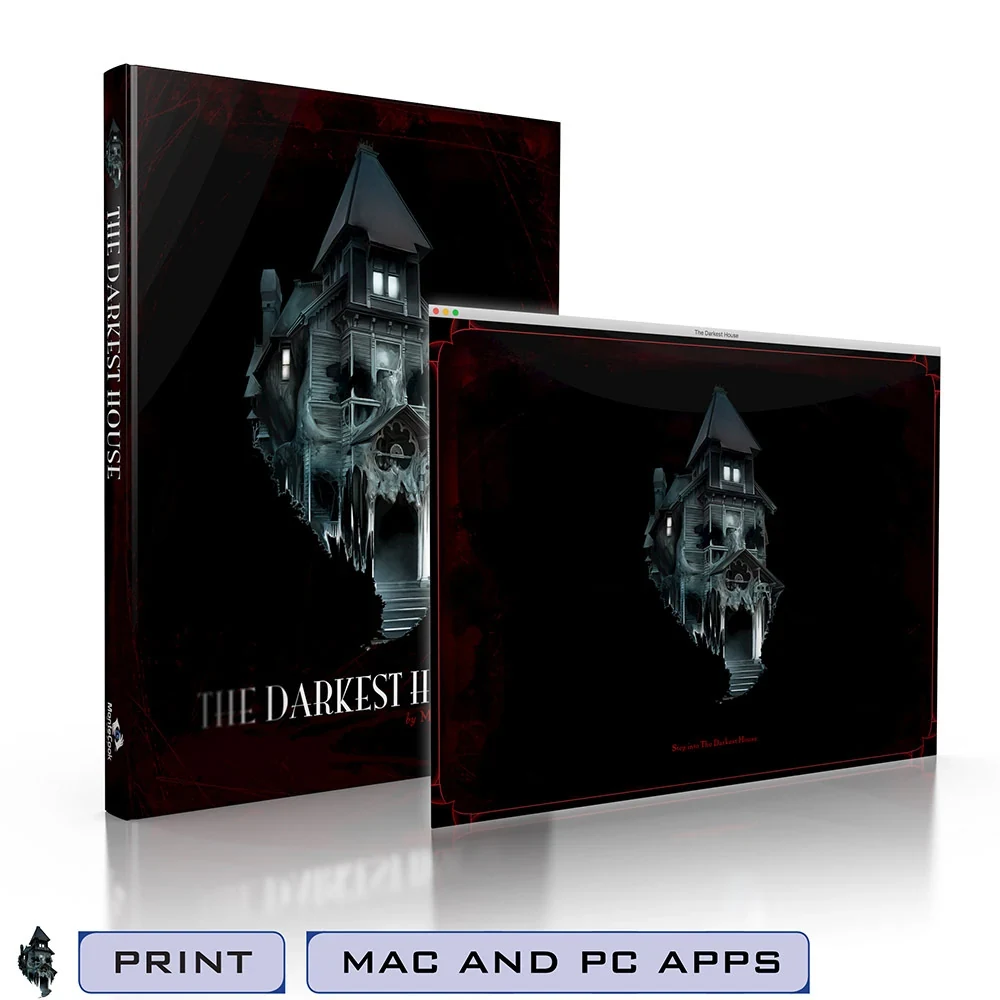
That premise is especially useful when the referee can make the entrance feel close to home. For example, a group whose campaign repeatedly returns to one city could encounter the apartment in a building they already know. That is an insertion idea, not a prescribed scene: the useful choice is to connect the threshold to established places before the horror draws on established people. The House is designed to challenge characters’ memories and personal fears, including their ideas about family, friendship, morality and truth. Those are intended dramatic pressures, not a guarantee that every party will emerge closer.
The Darkest Woods: an Interruption in Hostile Wilderness
The Darkest Woods provides a different kind of intrusion. A trail marked by missing-person posters, a forest local children avoid, or a twisted tree close to home can lead toward it. The Woods are not simply one forest on a particular map: the premise allows them to be reached through untamed or shunned wilderness in many settings. Their defining attitude is indifference rather than the House’s hunger. Once the characters are inside, the published emphasis is survival and escape—not treating the place primarily as a dungeon to explore and loot, even though discoveries and treasures may exist.
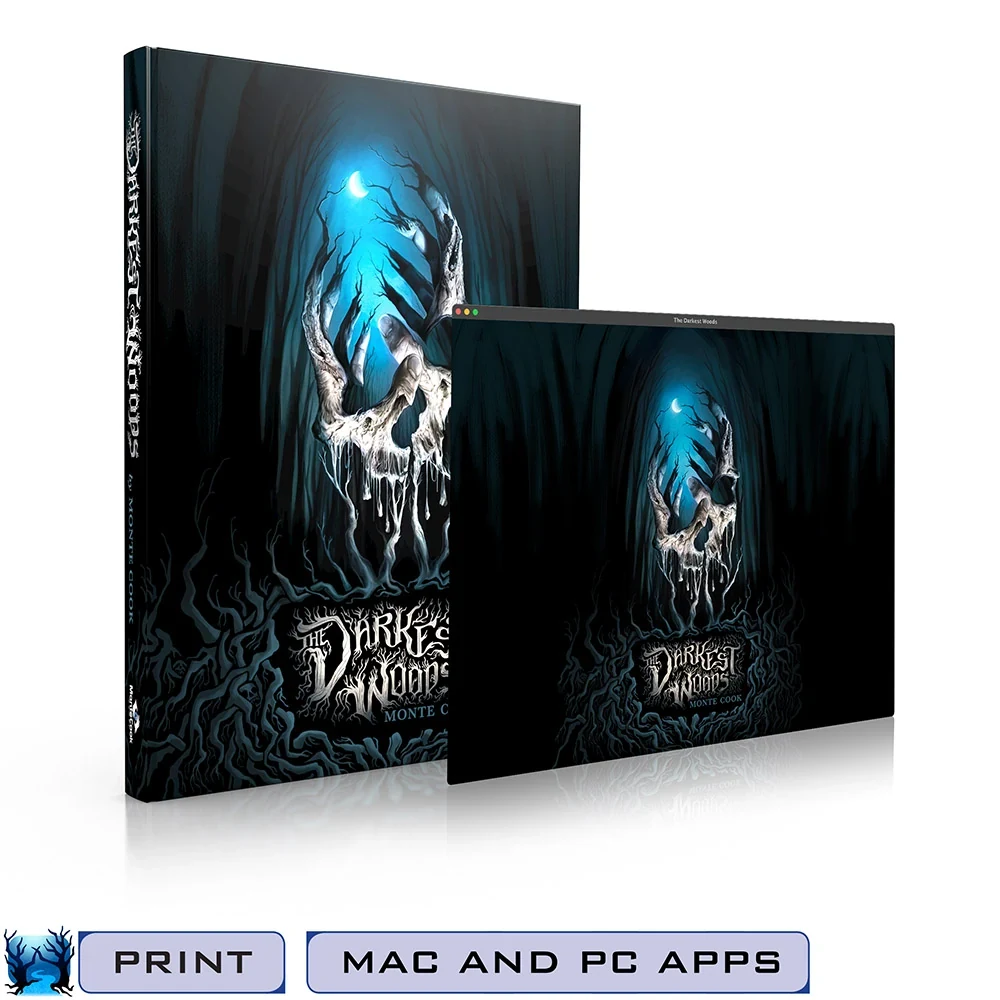
For example, an ongoing campaign with a well-used road between two settlements might have the party take a nearby trail they thought they understood. What matters is not inventing a new continent for the adventure; it is giving the characters a plausible step from their familiar route into somewhere they cannot readily leave. The Woods’ inhabitants include creatures, spirits, cultists and stranger threats, while its personal horror, like the House’s, draws on what the PCs remember and value. It offers material for many sessions, but the publisher does not impose one fixed duration for a group’s detour.
Neither premise requires brand-new protagonists. In fact, both are expressly aimed at characters who already have personalities, relationships and shared history for the horror to work upon. New characters are possible, but a referee using them would have less established campaign material to draw from unless the group first supplies it. For a continuing campaign, that gives you a practical test: can you identify a few existing bonds, fears or unresolved choices that would make this interruption matter to these PCs? If not, choose the premise your players most want, then establish those stakes before crossing the threshold or entering the trees.
How the System-agnostic Insertion Works
“System-agnostic” here does not mean dropping the adventure unchanged into your usual rules and assuming every encounter already has your game’s statistics. The Darkest House supplies the House System to convert existing characters for play inside it; its materials include Secrets of the House, with background, conversion rules and House Rules, plus Crossing the Threshold, which gives players conversion guidance. When the PCs emerge, the publisher says you return to their normal character sheets. It also says the approach can bring characters from different games together.
The Darkest Woods describes its conversion framework as the Darkest System, encompassing the House and the Woods. It likewise takes characters from their current game into adventure-specific play and returns them to their regular sheets afterward. The publisher presents conversion as taking about five minutes; treat that as its estimate for the process, not a promise covering every character build or the referee’s time learning the rules. Both products provide character sheets and GM and player reference materials, so the sensible preparation is to read the relevant conversion guidance before asking players to cross over.
This temporary rules boundary is part of the buying decision. If your table is comfortable setting aside its usual sheets for a horror excursion, either adventure is designed for that move. If keeping every moment under your campaign’s existing mechanics is essential, do not read “compatible with the game you’re already playing” as a promise of a complete, ready-made conversion of the adventure into that game’s stat blocks. The advertised route is to bring your characters into the adventure’s rules and take them back out.
It also means you need not treat the two titles as consecutive chapters of one character-conversion project. Buy the House for its particular place and pressures, or the Woods for its wilderness ordeal. Owning the House is not presented as a prerequisite to entering the Woods; “spiritual successor” describes their relationship more accurately than “part two of a required story.”
Hardcover, Desktop App, or Both?
For face-to-face play, the hardcover is the straightforward GM reference. The Darkest House is a 296-page hardcover, with each room presented as a two-page spread. The Darkest Woods also uses two-page room spreads. Both book descriptions point to shortlinks and QR codes for downloading and sharing player-facing maps, room images, handouts and sound files. The Woods additionally advertises a large collection of maps, handouts, audio, messages and other items. Those sharing links are a reason to plan how you will display or distribute resources; buying print does not mean every player-facing asset must be managed solely from the printed page.
For a print copy, The Darkest Woods on Amazon is the Monte Cook Games paper adventure, model MCG414. Choose the publisher’s app or print-plus-app option if you also want the desktop software.
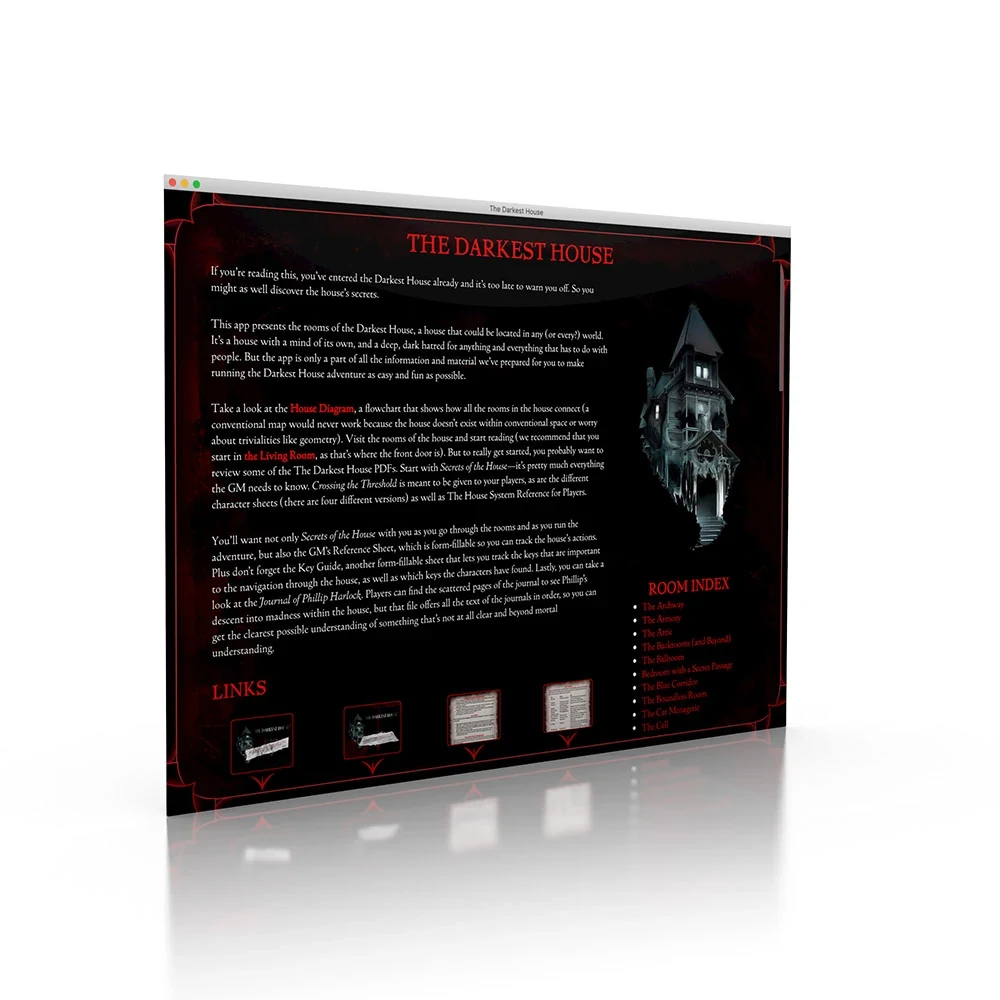
A hardcover can serve an online game, too. You can keep the open book as your reference and send resources to players through your usual channels, but the publisher notes that sharing from print takes a few more clicks. Conversely, the desktop app is not a PDF edition: it presents the adventure in a screen-formatted, navigable format intended to make player resources easier for the GM to share during online play. Its principal advantage is that workflow, not a different core horror scenario that print buyers must purchase separately.
The GM needs a desktop or laptop running Mac OS or Windows to use either app, and one app purchase includes both operating-system versions. Only the GM needs a copy; players do not each need to buy or install the product to receive shared resources. The publisher describes using the apps alongside calls or online play through services such as Zoom, Discord, Roll20 and Foundry. That describes a GM-run adventure alongside those tools, not a promise of a native module, automated import or separate platform entitlement. If the GM’s machine is old or uses another operating system, check current requirements before choosing the app; the product descriptions do not supply minimum OS versions.
The apps can also be used at a physical table. The House description specifically says face-to-face app use needs a computer with internet access; the Woods description specifies a Mac or PC for that use. Do not assume every linked resource will be available offline simply because the main product is a desktop app. In either format, the GM still decides when to reveal images, maps or audio rather than handing players unrestricted access to the adventure.
| If your priority is… | Start with… | Why |
|---|---|---|
| A familiar doorway opening onto personal, malignant horror | The Darkest House | Its entrances can sit inside an established settlement, building or other inhabited setting. |
| Getting lost in wilderness and trying to survive the way out | The Darkest Woods | Escape, rather than clearing a lootable dungeon, is its stated focus. |
| Running in person with an open reference book | The chosen title in print | The hardcovers use two-page room presentations and link to shareable player resources. |
| Running online from a Mac or Windows computer | The chosen title’s desktop app | It is formatted for screen navigation and GM-led resource sharing. |
| Regularly running the same adventure both ways | The chosen title’s print-plus-app option | It supplies both workflows; neither is required to make the other a complete adventure. |
Each publisher listing offers those three purchase choices for its respective title: print, Mac-and-Windows app, and print plus app. The combined choice is book plus app, not book plus PDF; neither listing presents a dedicated PDF purchase option. Likewise, “both formats give you everything you need” describes the adventure’s contents and supporting play materials, not a promise to supply the core rules of whatever RPG your continuing campaign normally uses.
Make the Insertion Fit Before You Buy
Start with the campaign’s next believable point of contact. If the party’s current concerns are tied to a home, community or relationship, the House can make a familiar-looking location suddenly consequential. If travel, separation or exposure already creates tension, the Woods can turn a plausible patch of wild country into an escape problem. In either case, you can preserve the ongoing campaign’s identity: this is a detour that uses the PCs’ past, not a demand to replace their setting or abandon their usual sheets permanently.
Then decide what the GM will actually use at the table. For example, a referee who runs in person and shows the occasional image on a shared screen may prefer the hardcover and its resource links. A referee who navigates adventure material on a laptop while sending handouts through an online game may prefer the app. Buying both is reasonable when both ways of consulting the adventure matter to you; it is not a prerequisite for getting the conversion guidance and the adventure in your chosen format.
Finally, give the personal material room to work without promising an outcome. Both descriptions envisage characters confronting fears and important bonds, and both present the possibility of richer characters afterward. That is a design intention the referee can support by drawing on known PC history; it is not a measured result or a requirement that players feel a particular way. Pick the horror landscape your group will engage with, prepare its conversion boundary, and buy the format that matches how your GM actually runs sessions.